A Clear Message for Maritime Marketers
SMF Fest 2026: A Clear Message for Maritime Marketers
What gives people the confidence to act? It was the question underneath almost every conversation at SMF Fest 2026, from fuel choices to port infrastructure. Confidence has to be earned by the economics and the infrastructure stacking up, but people also can’t act on what they don’t understand or trust. Here’s where marketing and communications fit in.
Event takeaways
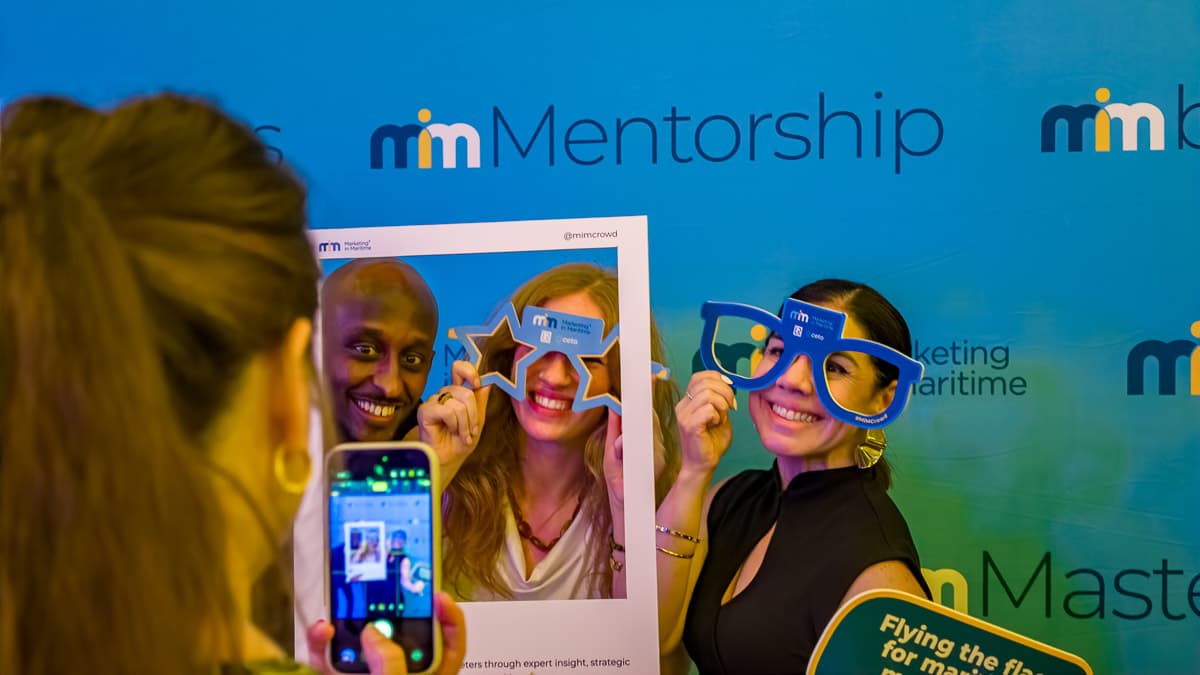
Having attended plenty of corporate events over the years, I knew right away that SMF Fest was going to be different. The venue, flow and logistics all contributed to the uncommon experience; but what made the event genuinely unique was its emphasis on participation.
As marketers, we know the challenge of not only capturing but holding the attention of our audience. So, this event takes that problem and presents the solution in the form of autonomy and ownership. When you attend the SMF Fest, you're not there to simply consume idly; you're integral. It's not an easy ride, but it's one you'll adore.
Rather than sitting through presentations, attendees were primed to contribute, challenge ideas and share experiences. The result was a level of engagement and honesty that you rarely see at traditional conferences. Discussions felt open, practical and grounded in reality rather than rehearsed talking points.
It genuinely felt as though every attendee had the opportunity to contribute, ask questions and be heard. That's unusual in our industry and one of the reasons the event has built such strong advocacy amongst participants. So as a maritime marketer, what can you take from this?
For me, the first area to highlight is that the quality of conversation was real, vulnerable, and immensely valued. This takes us back to a core marketing principle of authenticity.
The Topic That Kept Appearing? Communication.
One of the most interesting observations from a #MiMCrowd perspective, was how frequently discussions came back to communication... or lack thereof.
Across conversations about decarbonisation, alternative fuels, regulation and innovation, senior leaders and technical specialists repeatedly highlighted the need for better storytelling, clearer positioning and stronger communications. As an industry, we don't lack expertise, but we often struggle to explain complex change in a way that customers, employees, investors and stakeholders can understand. As marketers, that's a significant opportunity.
The maritime sector is entering a period of transformation driven by new technologies, changing regulations and evolving commercial pressures. Technical solutions matter, but what became clear throughout the event is that organisations also need people capable of translating complexity into clarity. If people don't understand the change, they won't support it. We are only human, we fear change and when push comes to shove, often the bottom line is the priority. Profits will rarely be risked.
This challenge surfaced repeatedly throughout the programme. During sessions led by Joseph Lambert (SGMF) on Fuel GHG intensity, Inga Sørensen and Eva Rampazzo (MMMCZCS) on FuelEU compliance, and Giulio Pacini (Wärtsilä Marine) on methane slip, discussions frequently returned to the same issue: the industry's ability to explain increasingly complex technical and regulatory topics in ways that people genuinely understand. Or perhaps that starting point should be, in ways people want to understand, challenging perceptions is a complicated art.
Decarbonisation Is an Infrastructure Challenge, Not Just a Fuel Debate
One of my biggest takeaways from the event was that the conversation around decarbonisation is far more complex than simply deciding which fuel wins. LNG, methanol, ammonia, hydrogen, e-fuels and biofuels all came up, and the discussions kept coming back to the practical realities of making any of them work, from methane slip on the gas side to scaling supply for the newer fuels.
What’s becoming increasingly clear is that ports and logistics providers hold enormous influence, because they’re the infrastructure that enables transformation. Whether it’s bunkering facilities, storage, fuel availability or even the longer-term question of nuclear, ports will need to develop alongside the fuels, and without the right facilities and operating models many of the industry’s ambitions remain exactly that: ambitions.
That perspective was reinforced by several speakers. Claudia Beumer (C4 Fuel) encouraged participants to think beyond individual fuel choices and focus on what is needed to accelerate adoption, while in his session, Max Fröhlich (TGE Marine) highlighted the importance of fuel ecosystems, infrastructure and supply chains. The conversation repeatedly demonstrated that the challenge is no longer simply which fuel might win, but whether the wider ecosystem exists to support it.
Valencia Shows What Change Looks Like in Practice
The port visit provided an interesting glimpse into how some organisations are tackling that challenge. It was fascinating to see the port in action, and for any marketer who hasn't had the chance to get 'out in the field' you should seek out those experiences.
Valencia has positioned itself as a testing ground for innovation. The port is actively exploring alternative fuels, trialling new technologies and challenging traditional assumptions about what a modern port can be. On the surface, it's an impressive story of innovation. But the reality is more nuanced. Much of the momentum is being driven by legislation and regulation. European policy and Spanish legislation are creating very clear expectations around emissions reductions, shore power and decarbonisation. In many cases, ports no longer have the option of waiting to see what happens.
Action towards 2035
The port's ambition to achieve carbon neutrality by 2035 reflects that urgency, with the current plans set to achieve approximately 98% of its port equipment running on electric and the remaining 2% operating on hydrogen. Read on here.
However, what makes the story interesting isn't the headline. It's the challenges behind it. Hydrogen remains difficult to store and transport at scale. One discussion highlighted the reality that daily hydrogen consumption requirements can be close to the amount that can physically be stored on site. That's why Valencia is already exploring future ammonia solutions, with plans to convert ammonia into hydrogen within the port itself. Rather than transporting large quantities of hydrogen, the aim is to bring in ammonia and convert it closer to the point of use. Is it the way of the future? Time will tell, but we have to be willing to experiment to make progress.
And it highlights something that came up repeatedly throughout the event: the industry isn't short of ideas. It's trying to solve the operational realities that sit behind them. Both technical and economic feasibility are critical and highly contentious. You need to be in the room to get that flavour! SMF Fest is a safe space under the Chatham House Rule, so you really do need to be there to benefit.

Regulation Is Driving Much of the Conversation
Regulation plays a role in accelerating change. Many sustainability discussions are presented publicly as voluntary initiatives or corporate ambitions. The reality is that legislation is increasingly forcing action.
For example, vessels calling at ports will face growing pressure to connect to shore power rather than running auxiliary engines while alongside.
That creates challenges and opportunities right across the value chain. Ports need to invest. Operators need to adapt. Technology providers need solutions. And then, naturally, marketers need to explain why the change matters!
What Does This Mean for Maritime Marketers?
This was probably my biggest reflection from the two days.
The maritime industry doesn't have a communication problem because it lacks stories.
It has a communication problem because many of those stories are becoming increasingly technical, regulatory and complex.
· Alternative fuels.
· Emissions trading.
· FuelEU.
· Infrastructure investments.
· Energy transition.
These are difficult topics, and that's just scraping the surface.
Yet businesses still need customers, investors, employees and stakeholders to understand them. So it was encouraging to hear communications being recognised as a priority by technical and commercial leaders throughout the event.
As marketers of the industry, have no doubt, you play a vital role in helping the industry navigate change. If people don't understand the change, the change doesn't happen. And that's where marketing, communications and storytelling become critical.

Plans are underway for SMF Fest 2027. Contact Banu Kannu on banu@uncommonconferences.com for more details and to be part of the tenth anniversary edition of this unique industry experience.